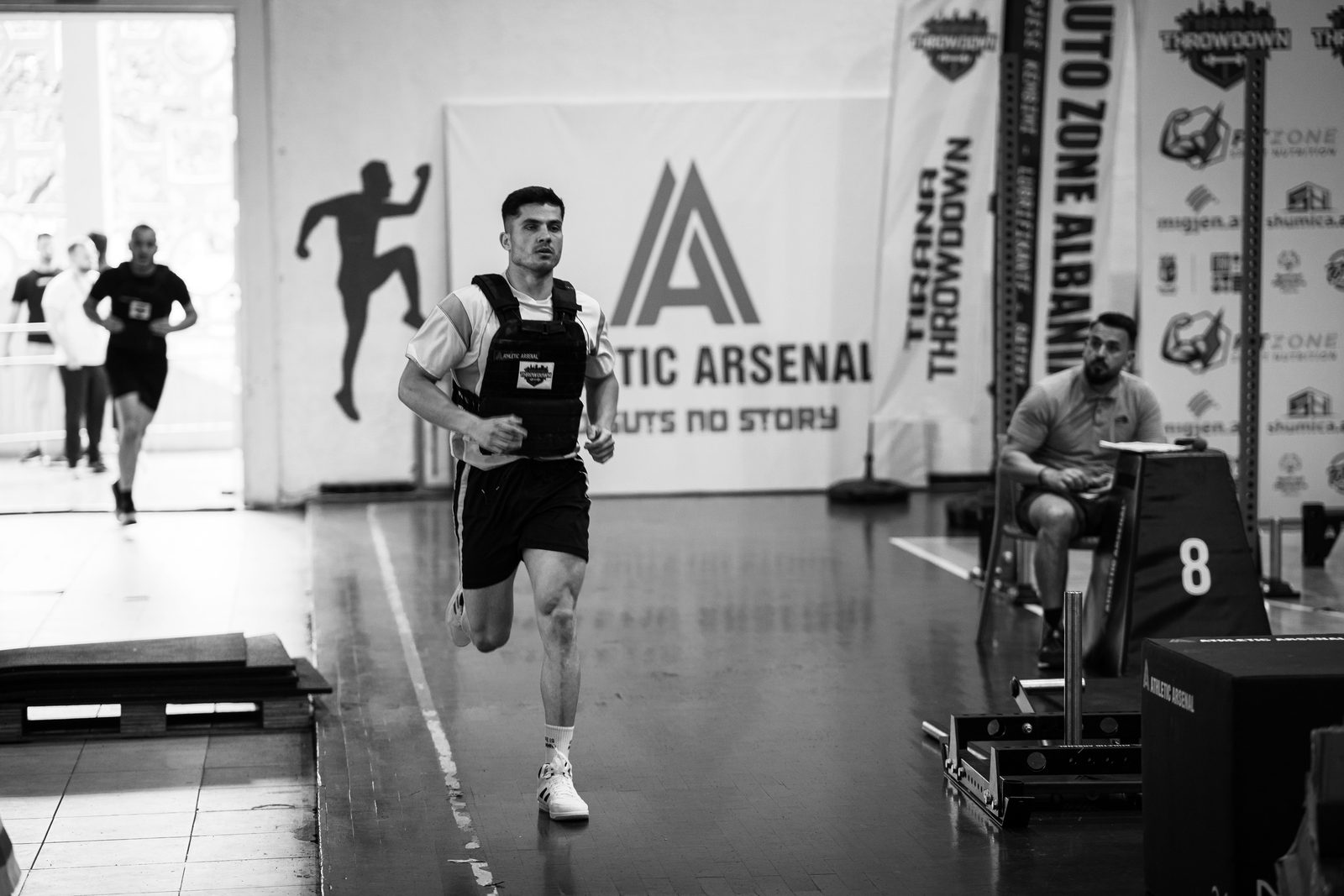
For many people, two or three strength-training days per week are a useful starting point. Four days can help distribute more work into shorter sessions. The best schedule depends on the work you need to do and the days you can consistently attend.
Training frequency is not the same as training volume. Four short sessions may contain less total work than two long ones. Before comparing schedules, ask how many useful sets each muscle receives across the week.
What frequency research says
A 2019 meta-analysis found no meaningful hypertrophy advantage from higher frequency when weekly volume was matched. A 2026 dose-response meta-regression separates muscle-size and strength outcomes: frequency had more consistently identifiable effects for strength than hypertrophy. Do not turn the older finding into a blanket statement that frequency cannot matter.
Extra sessions may make weekly work easier to distribute or provide exercise practice. The newer analysis drew largely on young, male participants, and statistical models depend on study selection and set-counting assumptions. Neither paper proves that a particular two-day plan equals every higher-frequency programme.
Separate total days from muscle frequency
A four-day upper/lower split usually trains each broad muscle group twice weekly. A three-day full-body programme may train them three times. A six-day body-part split can train some muscles only once. Counting gym visits alone hides this distinction.
Think about your exercises rather than only the name of the split. Presses train several muscles; rows and pulldowns overlap too. Set counting is useful for organising a programme, but indirect work is not an exact universal conversion.
| Weekly lifting days | Example structure | Main practical advantage |
|---|---|---|
| 2 | Full body on both days | Lower scheduling demand |
| 3 | Full body or alternating sessions | More opportunities to practise |
| 4 | Upper/lower repeated | Distributes work into shorter sessions |
| 5 or more | Several possible splits | Flexibility for higher workloads |
These are options, not a ranking. The most advanced-looking schedule is not necessarily the most suitable.
Compare two schedules fairly
Imagine you plan eight direct sets of a movement pattern each week. You could distribute them as four sets on two days, or two sets on four days. The second option is more frequent but contains the same planned total.
The practical question is which version lets you complete the work with consistent technique and manageable fatigue. If your fourth set is always rushed, splitting the work may help. If four visits create repeated missed sessions, two days may work better.
This example is not a claim that eight sets is ideal for everyone. It illustrates why schedule and workload should be considered together. See progressive overload explained for how to monitor the result.
Beginners should protect consistency
If you are new to lifting, two full-body days are an accessible starting structure. Add a third only if you want it, can attend and recover well. Your initial task is learning movements and building a record of repeatable sessions.
A shorter programme you complete can outperform a larger one you repeatedly abandon. Use the beginner plan to start, then record which parts fit your real week.
If Monday and Thursday work, you do not need to force a fashionable Monday-Wednesday-Friday schedule. Work, caring responsibilities and travel belong in programme design rather than appearing later as supposed failures of motivation.
How hard should each session feel?
Frequency cannot be decided independently of effort. A demanding lower-body session may need more recovery than a light technique session. Most sets do not need to end in complete failure; the appropriate effort depends on the exercise, experience and purpose.
Avoid scheduling two near-identical exhausting sessions back to back simply because a weekly calendar has empty spaces. Equally, you do not have to wait until every trace of soreness disappears before moving. Persistent pain is different from routine soreness and may need individual assessment.
Where cardio and sport fit
Your total training week includes activity outside the weight room. Running, cycling, team sport and physically demanding work can affect available energy and recovery. You can combine activities, but plan around the hardest sessions rather than treating each programme as independent.
If legs consistently feel heavy for your main sport, review lifting volume and placement. A schedule change may help more than an extra rest-day supplement. There is no need to remove all enjoyable activity to focus on muscle.
Signs your schedule needs adjusting
Repeated missed sessions suggest that the plan exceeds your available time. Declining performance across several weeks can suggest a recovery or workload problem, although it is not a diagnosis. Sessions that become unnecessarily long may benefit from redistribution.
Try one small change: reduce optional sets, move a session or split a long workout. Observe for several weeks. Avoid simultaneously changing every exercise and your diet, because then you cannot tell which decision mattered.
Choose a schedule you can repeat
Start from your reliable days, organise the weekly work, and retain enough flexibility for ordinary interruptions. Two, three and four days can all be productive. Frequency is a tool for delivering training, not a score of commitment.
References & editorial status
Spot an error? Submit a correction.
Reports are saved for editorial review, not emailed automatically. For a direct enquiry, email the publication.