The short version
The deadlift is a way to lift a load from the floor using coordinated work at the hips and knees. It is a skill to learn, not a required test of fitness. Begin with a manageable variation and repeatable setup.
Setup and movement
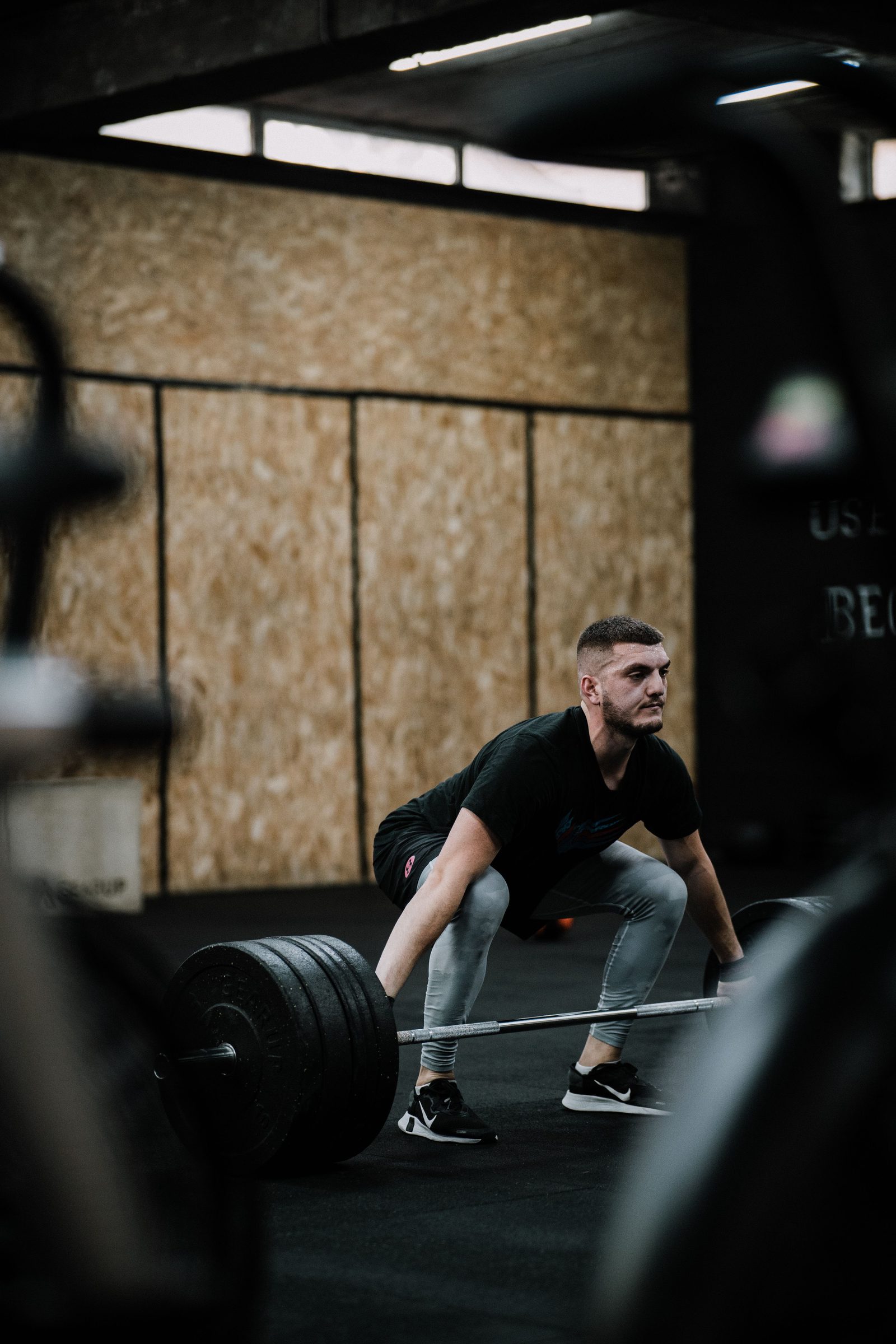
Clear the space and use stable equipment. With the bar close to your shins, take a roughly hip-width stance and grip outside your legs. Bend at the hips and knees to reach the bar. Build tension before moving, keeping the load close as you stand. Finish standing tall rather than leaning backwards.
Return the load under control by moving the hips back and bending the knees as needed. Reset before the next repetition. A double-overhand grip is a straightforward starting option for light practice. Ask for qualified instruction if the setup feels unfamiliar or you cannot control the movement.
What it trains
The hips and legs move the load while the trunk and grip help control position. Feeling tired in a body part is not proof that technique is appropriate. Avoid turning this into a competition to feel a particular muscle or reach a published strength standard.
Choose the right starting variation
A raised starting position can reduce the reach required, provided the supports are secure and designed for the load. A dumbbell hinge or another comfortable hip-dominant movement may fit your circumstances better. Variations change the movement; they are not guaranteed fixes for pain.
| Planning question | What to write down |
|---|---|
| Which version did you use? | Barbell from floor, raised bar or another variation |
| Is the comparison fair? | Same starting height, load and repetition style |
| What changed? | Load, repetitions or setup; avoid changing all three |
Common mistakes
Pulling suddenly before taking up tension makes the start less predictable. Letting the load drift away changes the demands of the lift. Adding weight when the starting position changes every set makes progress difficult to interpret. Film only if useful and private; a video still cannot diagnose pain or establish suitability.
Put it in a training week
Our builder includes a Romanian deadlift or dumbbell hinge as examples. Those differ from a conventional deadlift from the floor; do not silently treat the names as identical. If you substitute, record the new exercise and begin with a manageable workload. There is no need to add every hinge variation to the same session.
Questions worth asking
Must the bar start on the floor? No. Equipment dimensions and your comfortable range can make a raised starting point more practical. Should every repetition be maximal? No. Learning with a controllable load is different from testing a maximum.
Your next step
Use the training log to record the variation, sets, repetitions and load. The one-rep-max calculator is only an estimate from a completed set, not a reason to attempt that weight. Stop for pain and seek appropriate help.
Evidence and limits
ACE describes the conventional deadlift. Research on resistance training supports training generally, not one mandatory lift. These instructions cannot assess medical suitability, lifting technique or the cause of symptoms.
References & editorial status
Spot an error? Submit a correction.
Reports are saved for editorial review, not emailed automatically. For a direct enquiry, email the publication.