The short version
Choose a weight you can get into and out of position comfortably. Practise the movement before adding load. A stable, repeatable press gives you a better basis for tracking progress than changing your technique to finish a set.
Setup and movement
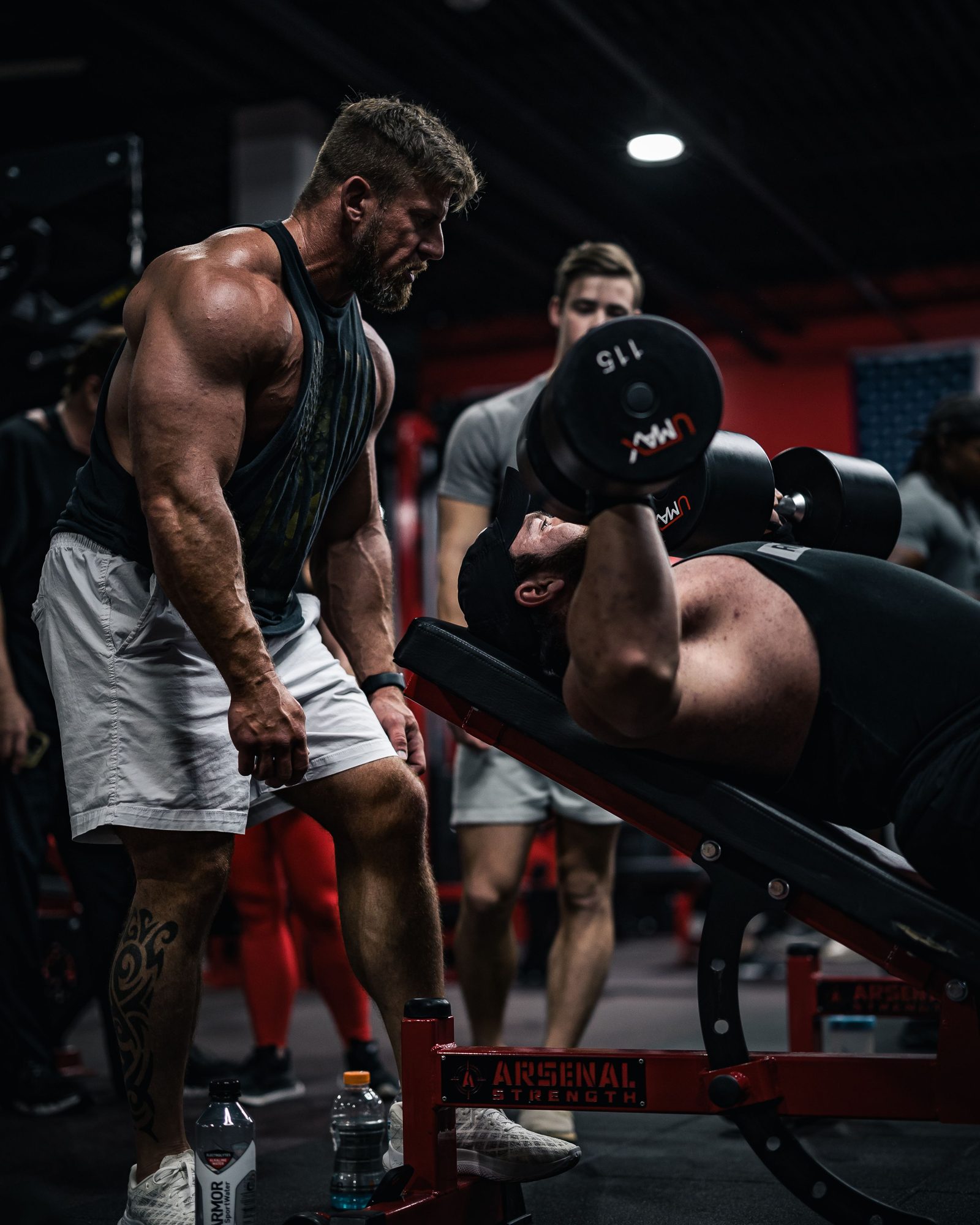
Use a stable bench with clear space around it. Place your feet firmly on the floor. With help if needed, bring the dumbbells into position above your chest with a closed grip. Keep your head and upper back supported.
Lower the weights under control, with your wrists above your elbows. Use a comfortable range rather than forcing the dumbbells down. Press back up without bouncing or crashing the weights together. Arrange a safe way to finish the set before starting; a spotter can help with handling the weights.
What it trains
The chest contributes to pressing, with the front of the shoulder and triceps assisting. This does not mean the movement isolates one muscle or is essential for everyone. ACE's exercise guide provides a demonstration of the movement; the photograph here is editorial context, not a complete technique assessment.
Make it fit your programme
An illustrative starting session is two manageable working sets of 6–10 repetitions, after lighter practice. This matches the beginner option in our programme builder; it is an editorial template, not a trial-tested prescription for you. Leave enough capacity to keep the last repetition controlled.
| What you notice | A practical response |
|---|---|
| Getting the weights into place is harder than pressing | Use lighter weights or a suitable machine |
| Repetitions change as you tire | End the set before control breaks down |
| You cannot repeat your setup | Record bench position and foot placement |
Common mistakes and alternatives
Rushing the descent makes it harder to compare sets. A weight that requires assistance on every repetition is not a useful starting point for learning. Do not force through pain. A machine chest press, an incline push-up or a comfortable dumbbell floor press may be alternatives, but the range and skill demands differ. Choose a movement you can perform without symptoms; alternatives are not injury treatments.
Questions worth asking
Do you need a barbell as well? No particular implement is compulsory. Pick a press that fits your equipment and lets you practise consistently. Should the weights touch at the top? Contact is not a goal; control and a comfortable path matter more.
Your next session
Record the load per dumbbell, the repetitions in each set and the version used. Compare with the same setup next time. When the upper end of your range becomes consistently manageable, consider the smallest practical increase. Use the programme builder and read how progression works.
Evidence and limits
ACE supplies technique guidance. Currier and colleagues support resistance training broadly; their analysis does not show this exact exercise or our example session is superior. Written instructions cannot assess individual movement or replace hands-on help when needed.
References & editorial status
Spot an error? Submit a correction.
Reports are saved for editorial review, not emailed automatically. For a direct enquiry, email the publication.