The short version
A split squat keeps the feet in a staggered position while you lower and rise. It differs from a walking lunge, where you step between repetitions. Start with body weight and use a stable support if balance distracts from controlled movement.
Setup and movement
Stand with one foot forward and the other behind, leaving some side-to-side space rather than standing on a tightrope. Lower by bending both knees through a comfortable range. Keep your front foot planted and rise under control. Complete a set, then change sides.
Adjust your stance to find a position you can repeat without pain. There is no universal stance length for every person. A fixed support can make learning easier; avoid pulling yourself upward so hard that the exercise becomes a different movement.
What it trains
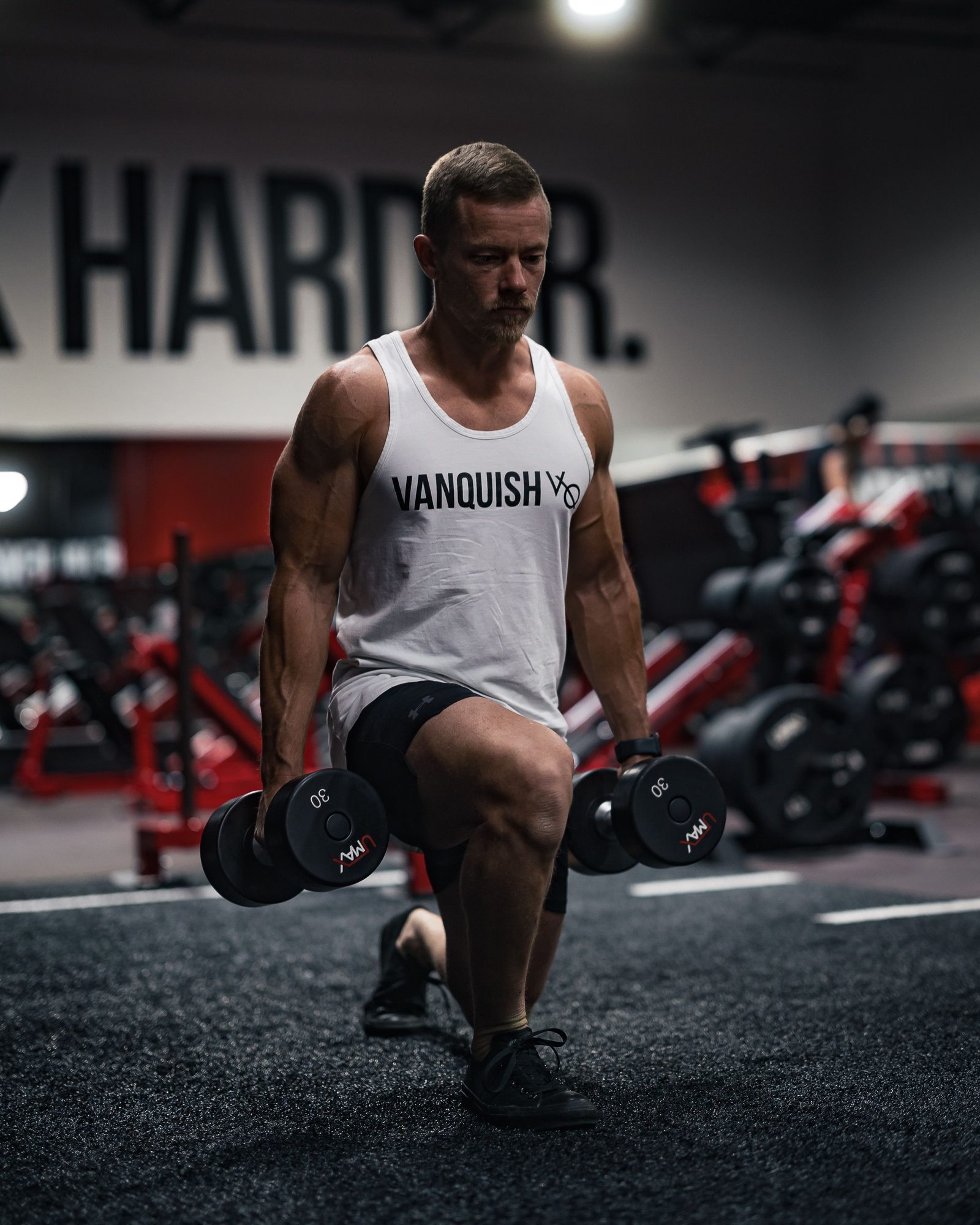
The thighs and glutes contribute to the movement. Your balance and trunk control affect how the exercise feels. More wobbling is not automatically a better training stimulus. The linked coaching demonstration shows the stationary version; the editorial photograph shows related lunge training, not a step-by-step split-squat sequence.
Start with a manageable example
Try a few comfortable practice repetitions per side before deciding whether to include working sets. If the movement suits you, a simple template is two sets in a controlled repetition range. The programme builder uses 6–10 as one example. Begin on the less confident side and keep the other side's repetitions comparable rather than chasing exhaustion.
Common mistakes and alternatives
Changing stance each repetition makes comparisons difficult. Adding dumbbells before balance is manageable can distract from learning. An excessively narrow stance may make the movement feel unstable. A supported squat or sit-to-stand offers a different way to practise leg training; it is not a medical substitute for an assessment.
| Version | What changes |
|---|---|
| Supported split squat | A fixed support reduces the balance demand |
| Body-weight split squat | No external load, but still requires control |
| Dumbbell split squat | Adds load and handling demands |
A rear-foot-elevated version changes the setup again. It is an option, not a compulsory progression or a better starting exercise.
Questions worth asking
Does the rear knee need to touch the floor? No. Use a repeatable comfortable range; floor contact is not the objective. Can both legs feel different? Yes, but persistent pain or a large unexplained change needs suitable assessment rather than an online diagnosis.
Your next step
Record support, stance, load and repetitions on each side. Progress one variable at a time. Put a comfortable version into your training programme, and read how many training days you need before adding more sessions.
Evidence and limits
The linked coaching resource describes exercise execution. It does not prove split squats prevent injury or correct every asymmetry. General training evidence cannot identify your ideal stance or personal exercise choice.
References & editorial status
Spot an error? Submit a correction.
Reports are saved for editorial review, not emailed automatically. For a direct enquiry, email the publication.