You can work on body composition without an extreme diet by improving resistance training, meal consistency and everyday activity. If fat loss is your priority, a manageable energy deficit may help. If a deficit harms health or your relationship with food, maintaining weight while improving fitness is a valid goal.
This draft offers a planning framework for generally healthy adults. It awaits independent expert review and does not prescribe weight loss for every reader.
Define the outcome before changing food
Body composition concerns fat and lean tissue, while health includes much more. Decide if your main goal is strength, a smaller waist, better training consistency or an improved capacity for everyday tasks.
Choose two or three measures that fit that goal. Do not collect every number available from a watch and a scale. A smaller set of useful observations is easier to interpret and less likely to turn ordinary variation into a problem.
Build around actions you can repeat
The Lopez systematic review supports resistance training as part of body-composition management in people with overweight or obesity. It does not test the example week below, identify one ideal programme or prove that every healthy-weight reader should lose fat. Interpret changes in fat and lean mass separately from overall health and daily function.
For adults who can exercise safely, WHO guidance includes muscle-strengthening activity on at least two days per week. This is a public-health baseline, not a complete muscle-growth prescription. Use a programme you can repeat long enough to learn. Keep a record of load, repetitions and difficulty. Progress can mean a more controlled movement, another repetition or a slightly heavier load. It does not require a new exercise every session.
Our muscle-building guide provides the starting context. New trainees should choose technique and repeatability before maximum effort.
Make meals dependable before making them smaller
Look at the meals that repeatedly become unplanned. If lunch is the problem, solving breakfast does little to help. Prepare a default lunch with a protein-containing food, produce and portions that suit the day.
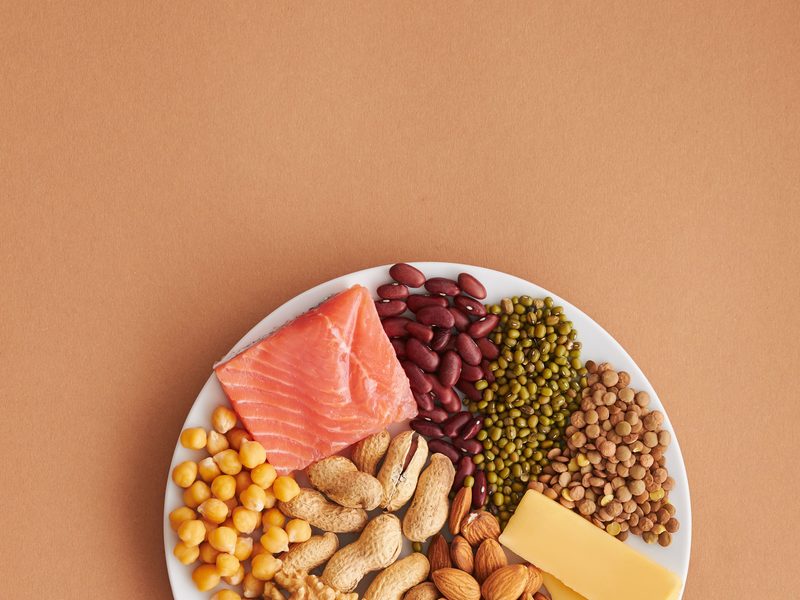
Frozen vegetables, tinned beans, oats and other ordinary foods can make a plan easier and cheaper. There is no need for detox products or specialist diet meals. The WHO’s healthy-diet guidance favours a varied dietary pattern; it does not require a supplement subscription.
If fat loss is appropriate, choose a small change you can observe rather than removing several food groups. Read the deficit guide to understand the energy-balance principle without turning a calorie estimate into a rigid rule.
Use an example week as an experiment
| Area | Example commitment | What to review |
|---|---|---|
| Training | Two planned strength sessions | Were they achievable and recoverable? |
| Meals | Prepare lunches on three busy days | Did this reduce unplanned eating? |
| Activity | Add a short walk on workdays | Did it fit without becoming compensation? |
| Progress | One weekly review of the record | Did the trend match the goal? |
This is an editorial example, not a research-tested protocol. Adjust the commitments to your starting capacity. A person already training consistently may need a different plan from someone restarting after illness.
Avoid compensation rules
Exercise is not a punishment for a meal. Skipping food because you missed training can make the whole routine unstable. Aim for a normal eating pattern on rest days as well as training days, adjusted sensibly for activity if needed.
If you find yourself repeatedly earning food through exercise, seeking permission to eat or feeling unable to rest, ask for support. A body-composition target is not a reason to ignore warning signs in your relationship with food.
Review trends without inventing precision
Use consistent weight or waist measurements only if they are comfortable and useful. Training progress, energy and how the plan fits your week also matter. Consumer body-fat readings cannot confirm tiny changes in muscle or fat.
If progress is slow, check the inputs before adding restrictions. If the inputs are stable but the goal still matters, adjust one variable. If the cost is becoming too high, change the goal or seek help rather than double down automatically.
The calculators can organise estimates, but they cannot determine your healthiest weight or guarantee a time to reach a physique.
Make the next phase easier
After a period of dieting, practise maintaining the routines that worked. Do not assume maintenance happens automatically once a number is reached. Keep strength sessions, useful meals and flexible social eating in the plan.
People under 18, pregnant or breastfeeding, experiencing unintentional weight loss or managing an eating disorder need tailored guidance. Medical conditions and medication can also change priorities.
A sustainable approach is allowed to look ordinary. Repeated useful actions, assessed honestly over time, are a stronger foundation than a dramatic diet you cannot live with.
References & editorial status
Spot an error? Submit a correction.
Reports are saved for editorial review, not emailed automatically. For a direct enquiry, email the publication.