A target, not a magic number
Protein supports your diet, but it cannot replace training. In Morton and colleagues’ meta-analysis, protein supplements added modest benefits alongside resistance exercise. The estimated average breakpoint was around 1.6 g/kg/day, with substantial uncertainty. It is not a hard ceiling or a guarantee for an individual.
Turn a target into meals
Our tool offers a planning range of 1.6–2.2 g/kg/day for healthy adults who resistance train. At 75 kg, that is 120–165 g. The upper end is a planning allowance, not a requirement for everyone.
Write down the meals you already eat. Identify which contain a protein source, then work out where a convenient addition would fit. Eggs, fish, lean meat, tofu, beans and lentils can all have a place. Food labels make packaged options easier to compare.
Food first, convenience second
A protein powder is an option when convenient. It is not a compulsory part of building muscle. Choose foods that fit your budget, preferences and digestion. A consistent pattern that you enjoy beats an elaborate menu you rarely follow.
Keep the rest of your diet in view
Protein is one part of the picture. Meals also need room for carbohydrates, fats and varied plant foods. Reaching a number does not automatically make a diet balanced.
What this evidence cannot tell you
This research concerns groups of healthy adults doing resistance exercise. It does not establish a personal requirement for pregnancy, kidney disease or other clinical situations. A qualified dietitian can help when you need an individual plan.
Read the estimate with its uncertainty
The meta-analysis included 49 trials and 1,863 participants. The estimated breakpoint was 1.62 g/kg/day, with a confidence interval of approximately 1.03–2.20. That interval is uncertainty in the model, not a requirement that every reader eat 2.2 g/kg. A correction notice accompanies the paper; this guide does not reproduce its detailed effect-size tables.
A day of meals, without a compulsory supplement
At 75 kg, 1.6 g/kg works out to 120 g per day. Dividing that arithmetic across four meals gives about 30 g per meal. This is an organisational example, not proof that equal meal timing is essential or a prescription for someone with clinical nutrition needs.
| Food option | What to compare | Practical use |
|---|---|---|
| Yoghurt or a fortified alternative | Protein per portion varies substantially | Check the actual label |
| Fish, eggs or lean meat | Portion and preparation affect the total | Combine with the rest of the meal |
| Tofu, beans and lentils | Protein density and portions differ | Combine foods that suit your preferences |
| Protein powder | Serving size, cost and tolerability | Optional convenience when ordinary meals are difficult |
Do not assign identical protein values to all plant milks or yoghurts. Measure a familiar day's intake once if useful, then simplify. Use the protein calculator for the arithmetic. Seek individual advice for kidney disease, pregnancy or other situations outside this healthy-adult evidence.
Build a food plan from a range, not a deadline
For the existing 75 kg example, the calculator's 1.6–2.2 g/kg range is 120–165 g per day. This is a planning range for the population described above, not a measured requirement for a particular reader. Morton and colleagues' model breakpoint is not a precise threshold that every person must hit.
You can use a lower-end planning example to check arithmetic. The entries below total 120 g; they are not recommendations for the amount required at each eating occasion.
| Eating occasion | Illustrative planning entry | How to make it real | | Breakfast | 30 g | Check the portion of foods you actually use | | Lunch | 35 g | Count the ingredients in your usual meal | | Evening meal | 35 g | Use the relevant cooked/raw basis consistently | | Another occasion | 20 g | An optional way to complete this example |
The table does not say four occasions are compulsory or that a larger meal is wasted. It simply shows how one total can be divided. Your schedule, appetite and ordinary food preferences still matter.
Choose foods before buying a solution
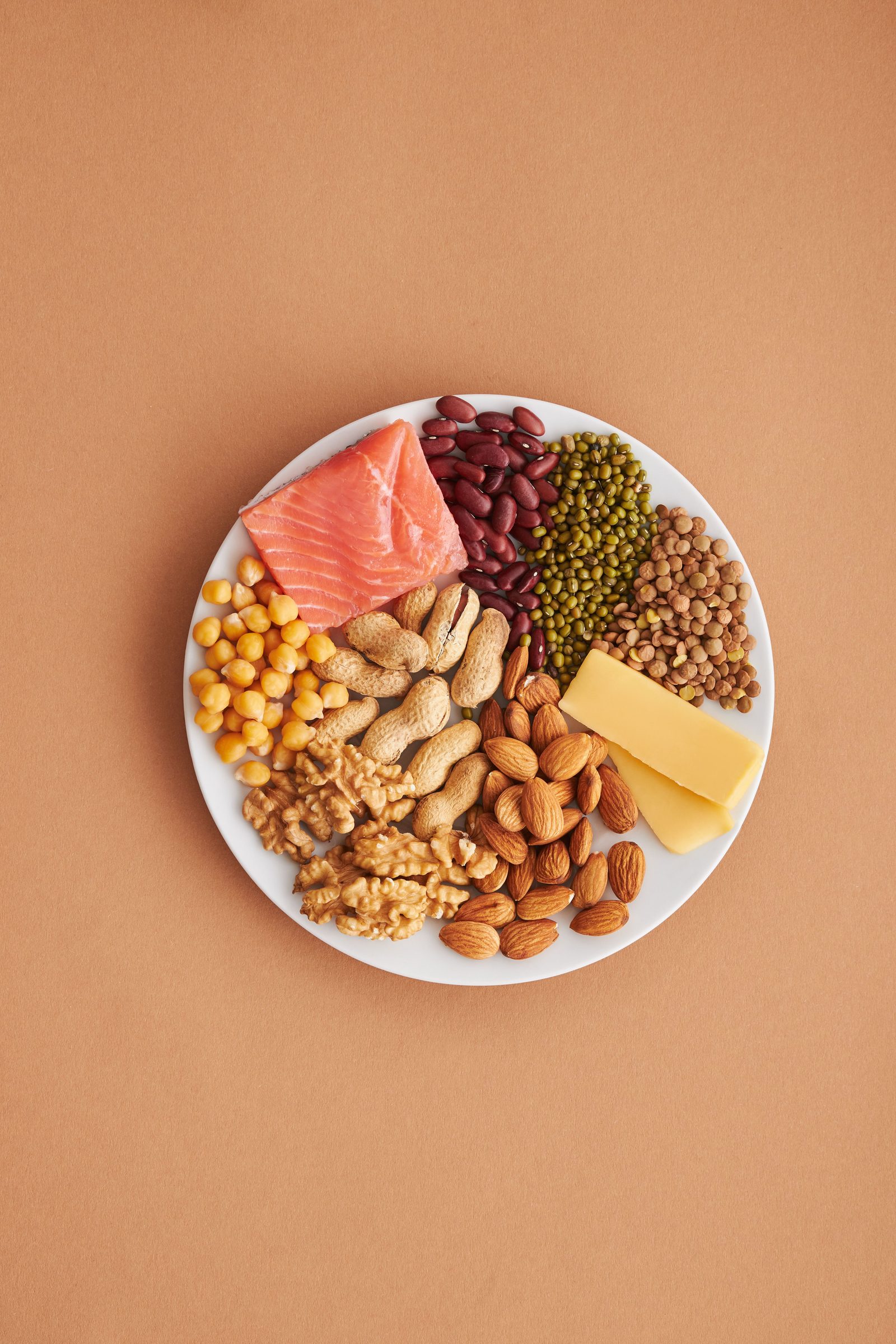
A useful list can include dairy or fortified alternatives, eggs, fish, meat, beans, lentils or other foods appropriate to your eating pattern. Their protein amounts differ. Use labels or a suitable food database for your actual portion; do not assign the same number to every serving or infer it from a photograph.
If your plan is already workable, there is no need to make it more complicated solely because a supplement advertises a timing window. If a convenient product is useful, evaluate what it adds to the whole day's food rather than treating it as a condition of successful training.
Read protein across your day for distribution context and simple meal planning for a repeatable routine. The protein tool can convert units and display the range; it does not assess a clinical nutrition need.
References & editorial status
Revision history
2026-10-15 — Owner-approved V8 revision: worked examples, research context and practical guidance.
Spot an error? Submit a correction.
Reports are saved for editorial review, not emailed automatically. For a direct enquiry, email the publication.