The short version
Start with a useful daily protein range and familiar meals. Spreading protein across meals can make that total easier to manage. It does not mean a larger meal is wasted or that missing a particular time ruins your training.
Start with the whole day
Our protein calculator uses 1.6–2.2 g/kg/day as a planning range for healthy adults doing resistance training. At 75 kg that is 120–165 g. This is not a clinical prescription, and the upper end is not compulsory.
Morton and colleagues found modest additional benefits from protein supplementation alongside resistance training. Their estimated average breakpoint around 1.6 g/kg/day has uncertainty; it is not a precise personal requirement. A separate review by Schoenfeld and Aragon discusses distribution and the difference between absorption and muscle-building responses. It does not establish a universal amount the body can absorb per meal.
A worked example
For someone using 120 g as an illustrative daily target, four eating occasions averaging 30 g would reach it. Three averaging 40 g would also total 120 g. These are arithmetic examples, not evidence that the patterns produce identical outcomes or that you need four meals.
| Eating pattern | Illustrative protein total |
|---|---|
| 3 meals × 40 g | 120 g |
| 4 meals × 30 g | 120 g |
| 25 g breakfast + 35 g lunch + 40 g dinner + 20 g snack | 120 g |
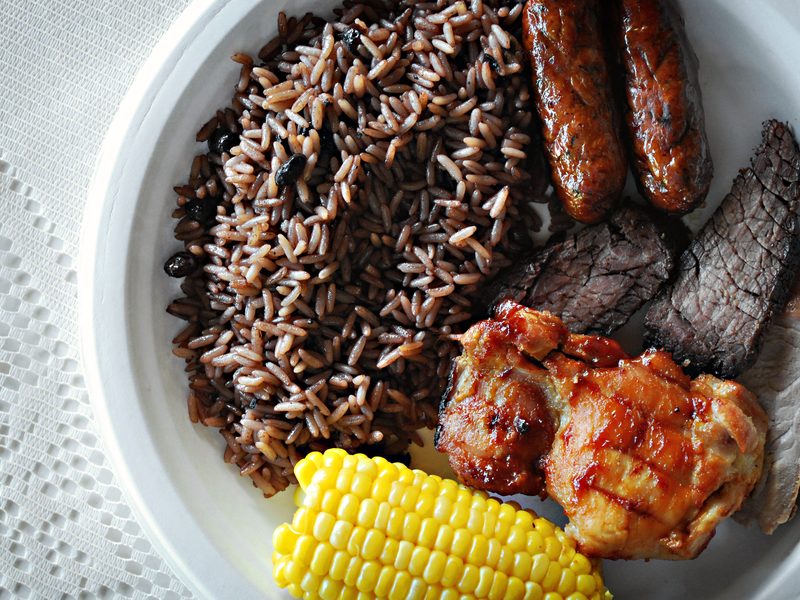
Use labels or a reliable food-composition reference to estimate your actual portions. Recipes, brands and preparation change the numbers; a photograph cannot verify grams of protein.
Build from meals you already eat
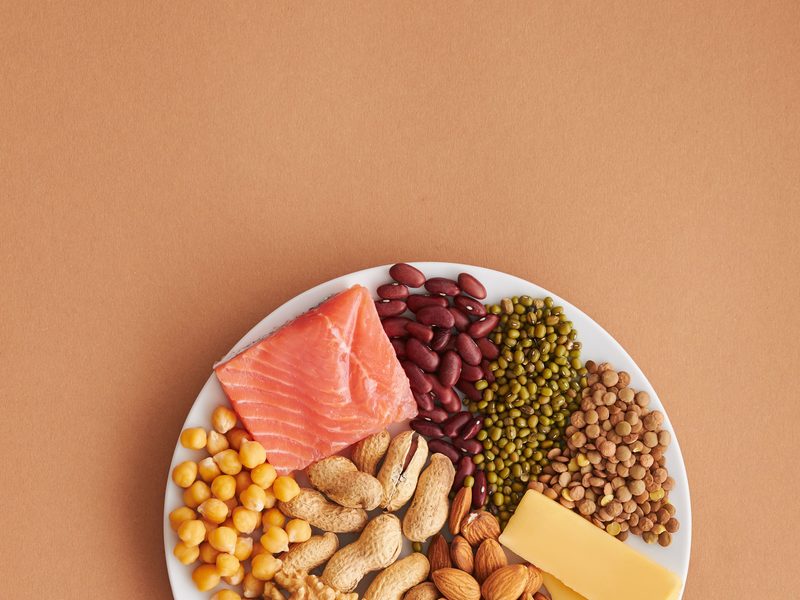
If breakfast is usually toast, consider whether eggs, yoghurt or a suitable plant option would fit. If lunch is a sandwich, compare fillings and portions before adding a supplement. Tofu, beans, lentils, dairy, fish and meat can all contribute; dietary preferences and allergies matter.
Make one change first. Planning an entirely unfamiliar menu can create more work than it saves. A convenient snack can help on a busy day, but there is no requirement to eat on a timer.
Avoid a narrow focus
Protein does not replace carbohydrates, fats or varied plant foods. Buying a higher-protein product does not automatically make a meal balanced or necessary. Compare the whole food, cost and how it fits your usual intake.
What to review
After a week, ask whether the pattern is practical, affordable and comfortable. If tracking is unhelpful or distressing, step back from numeric targets and seek suitable support. People with clinical nutrition needs need individual advice rather than this range.
Evidence and limits
Supplement trials and short-term measurements of muscle protein synthesis answer different questions. Neither can predict exactly how your body composition will change. The sample meal patterns here are editorial planning aids, not tested menus. Continue with protein research in context and building a balanced lunch.

References & editorial status
Spot an error? Submit a correction.
Reports are saved for editorial review, not emailed automatically. For a direct enquiry, email the publication.